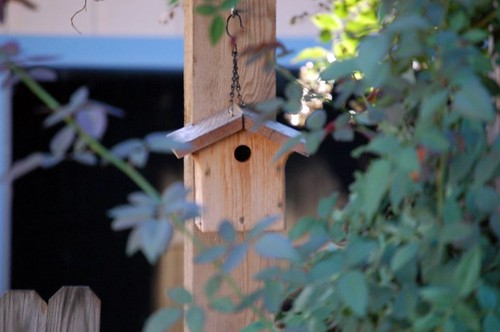
A few weeks ago, while Travis and I were procrastinating major projects, we removed a red wasp nest from inside our otherwise vacant wren house. We haven't been successful at getting wrens to move in and we felt that the wasps were worsening our prospects.
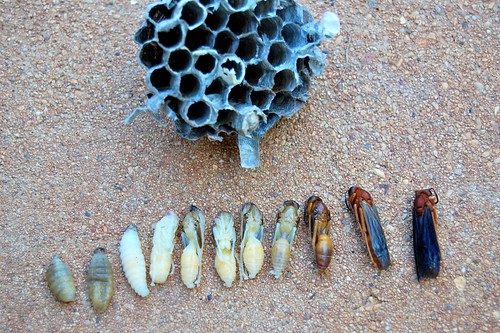
Our philosophy about bugs is "live and let live." But if that isn't possible, we try to use a less toxic means of removal. In this case, that meant that I slipped the house into a plastic bag and Travis flooded it with water. The next day, Trav inspected the nest chambers and removed all of the developing larvae. It sounds gross, but it was really fascinating to see the wasps in different stages of development.
A few of the mason bee houses that I've seen in magazines.
After that, we went back to working on our projects, or so I thought. When I leaned over to look at Travis' computer, I saw that the was deep into YouTube research about wasps and bees. He kept following links, which led him to videos about beekeeping. At that point, I chimed in that if he wanted to keep bees in the suburbs, he should get a mason bee house. I had seen pictures of them in home and garden magazines and it looked easy enough.
That sent the the two of us on a detour
researching mason bees and watching
videos about how to build a bee house. We learned that mason bees don't sting unless you handle them roughly, they don't mind you observing them up close, and since they are harrier than honey bees and don't have pouches to carry pollen, they are sloppier (and thus better) pollinators. Each female bee prepares her own nest in a preexisting hollow, narrow hole. She leaves enough nector and pollen to feed her devloping babies but doesn't stick around to nurture a colony.
At some point during our research, I suggested we could probably make our own mason bee house out of pants hangers and PVC pipe. My dad always has PVC and way too many dry cleaner hangers so I left him a voicemail describing my idea.
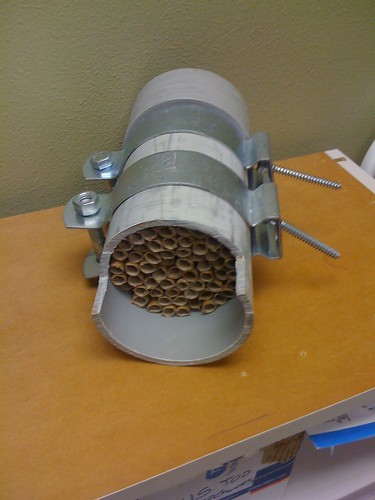
I was hoping he would give me the raw materials, but a few days later, he delivered this great mason bee house to me at work. (My dad, he loves me.)
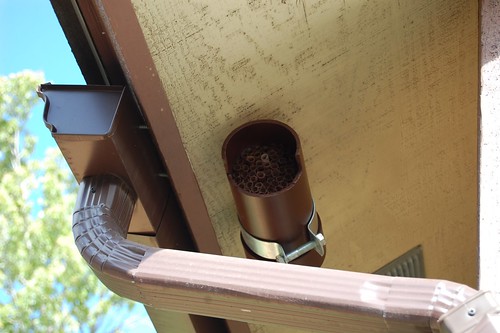
I spray painted it and we mounted it under a southeast facing eave of the house. We read that the rising sun stimulates the bees' activity. In South Texas, mason bees start working on their nests in February and March, and they are dormant during the fall and winter so we aren't expecting any tenents in our new apartment until next year. I hope we are more successful than we've been thus far with the wrens.